Techwear represents a paradigm shift in modern clothing, merging high-performance materials with avant-garde urban aesthetics. It moves beyond traditional fashion categories to focus on utility, durability, and adaptability in changing environments.
Understanding the materials behind the movement is essential for building a functional wardrobe. This guide explores the technical fabrics that keep you dry in torrential rain, warm in freezing winds, and comfortable during high-output activities.
The Techwear Aesthetic: Where Style and Functionality Become Best Friends
Techwear is often misunderstood as simply “looking like a futuristic ninja,” but the reality is grounded in practical design. It prioritizes the wearer’s interaction with their environment, utilizing articulated cuts and ergonomic patterns to allow unrestricted movement.
The aesthetic is a direct result of the function. Straps allow for fit adjustment or carrying capacity, while asymmetrical zippers often prevent chin abrasion or allow for specialized venting.
By integrating military-grade durability with sleek, urban silhouettes, techwear provides a solution for the modern commuter who faces variable weather and complex transit systems. It is clothing designed to solve problems rather than just cover the body.
The Heart and Soul of Techwear: Technical Fabrics
The defining characteristic of techwear is the use of advanced textiles engineered for specific performance metrics. Unlike cotton or standard wool, these synthetic or hybrid blends are created in laboratories to manage moisture, regulate temperature, and resist abrasion.
Technical fabrics often utilize laminate technologies, where multiple layers are bonded together to achieve different goals. An outer face fabric might resist tearing, while an inner membrane blocks water molecules but allows sweat vapor to escape.
This engineering allows a single garment to perform multiple functions simultaneously. A high-quality techwear jacket can serve as a raincoat, a windbreaker, and a breathable shell all at once, reducing the need for carrying multiple items.
Dressing to Impress: Essential Techwear Clothing Items
Building a cohesive techwear wardrobe requires understanding the role of each garment layer. A functional outfit is a system where each piece complements the others to maximize protection and mobility.
Jackets: The Hardshell and Softshell Spectrum
The jacket is the centerpiece of any techwear ensemble, often categorized as either a hardshell or a softshell. Hardshells utilize stiff, waterproof membranes like GORE-TEX Pro to provide an impenetrable barrier against severe weather.
Softshells offer greater breathability and stretch, making them ideal for high-activity days where total waterproofing is less critical than moisture management. Both styles frequently feature taped seams and waterproof zippers to ensure no moisture penetrates the construction.
Pants: Articulation and Storage
Techwear pants distinguish themselves through articulated knees and gusseted crotches, which allow for a full range of motion despite slim or tapered cuts. They often incorporate water-repellent coatings to keep legs dry during commutes.
Storage is another key component, with cargo pockets often redesigned to lay flat when empty or placed strategically for access while sitting. Many designs utilize modular systems, allowing users to attach extra pouches or gear directly to the trousers.
Hoodies: Advanced Mid-Layers
In the techwear ecosystem, the hoodie serves as a thermal regulator rather than just a casual staple. Designers often use merino wool blends for odor resistance or engineered fleece that traps heat while wicking sweat away from the skin.
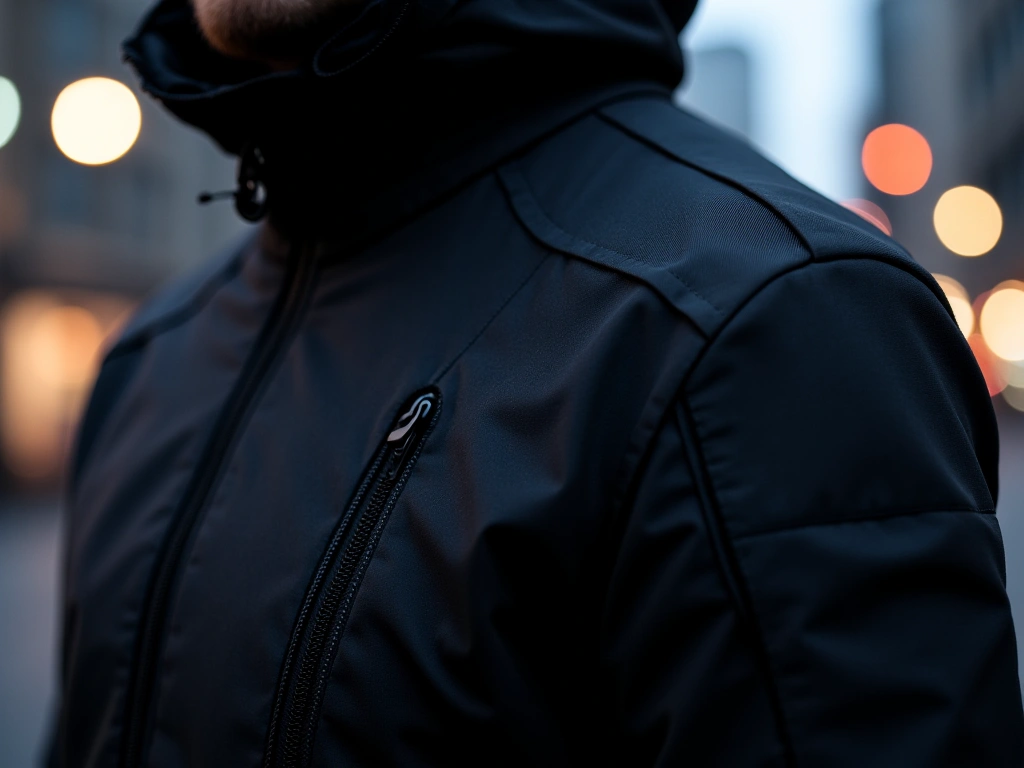
Features often include funnel necks for face protection, thumbholes to keep sleeves in place, and reinforced elbows for durability. These garments are designed to layer seamlessly under a shell without bunching or restricting movement.
Vests: Modular Utility
Vests provide core warmth and additional storage capacity without the bulk of sleeves, making them excellent for transitional weather. They often feature MOLLE webbing or similar attachment points for customizing your loadout.
Tactical vests in techwear are frequently worn over hoodies or even over light jackets to add pockets and visual complexity to an outfit. They bridge the gap between clothing and luggage, allowing you to carry essentials hands-free.
The Techwear Fabric Hall of Fame
The performance of techwear relies entirely on the branded technologies used in its construction. Familiarizing yourself with these names will help you assess the quality and purpose of a garment before you buy.
GORE-TEX: The Waterproof Standard
GORE-TEX is the most recognized name in technical fabrics, famous for its ePTFE membrane containing billions of microscopic pores. These pores are 20,000 times smaller than a water droplet but 700 times larger than a water vapor molecule.
This unique structure prevents rain from entering while allowing sweat vapor to escape, maintaining a dry internal microclimate. Variations like GORE-TEX Pro offer rugged durability, while GORE-TEX Paclite focuses on weight reduction and packability.
Polartec: Thermal Engineering
Polartec revolutionized insulation by creating synthetic fleece that retains warmth even when wet, a significant advantage over traditional down. Their Alpha insulation was originally developed for U.S. Special Forces to provide active warmth that doesn’t require shedding layers.
Modern techwear uses Polartec fabrics for mid-layers and linings to ensure consistent body temperature. The material is highly breathable, fast-drying, and durable enough to withstand repeated compression and washing.
Schoeller: The Softshell Pioneer
Swiss manufacturer Schoeller is renowned for creating “softshell” fabrics that blend weather resistance with extreme comfort and stretch. Their Dryskin fabric is a staple in high-end techwear pants due to its double-weave construction.
Schoeller also innovates with treatments like Nanosphere, a self-cleaning finish that mimics the lotus leaf effect to repel water and dirt. This makes garments easier to maintain and extends their lifespan significantly.
Primaloft: Synthetic Insulation
Primaloft provides a synthetic alternative to goose down, offering high warmth-to-weight ratios without the ethical concerns or vulnerability to moisture. Unlike down, Primaloft fibers maintain their loft and insulating properties even if the garment gets soaked.
This makes it the preferred insulation for wet, urban winters where rain is more common than dry snow. It is compressible, lightweight, and often used in liners or insulated parkas.
DWR: The First Line of Defense
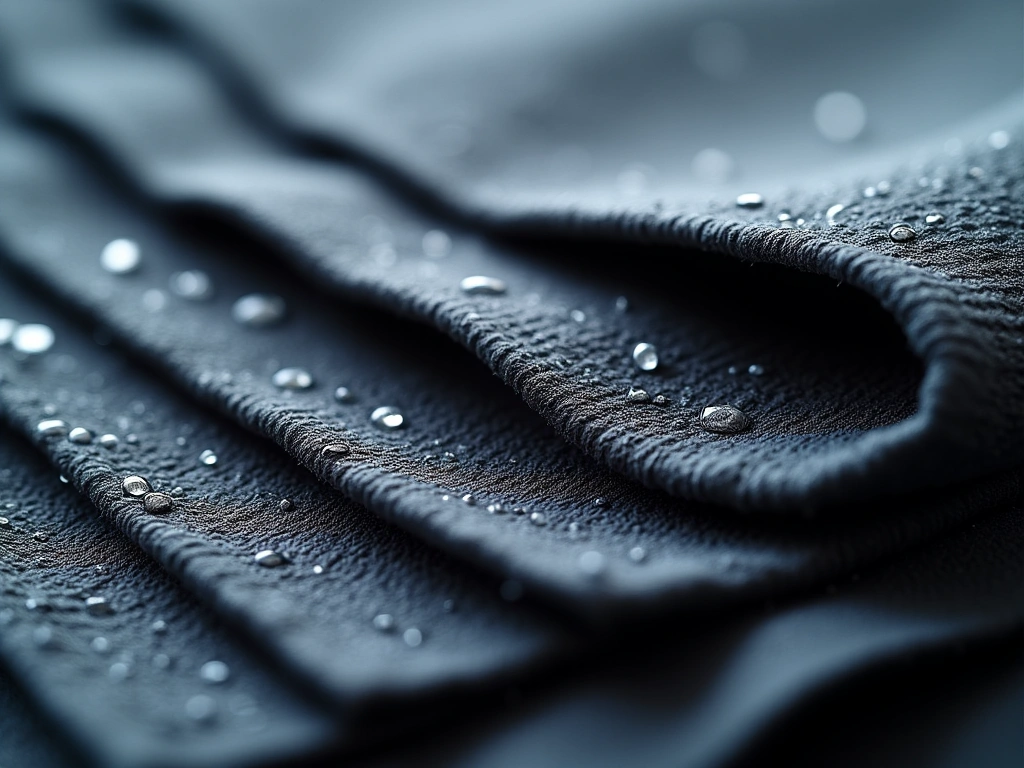
Durable Water Repellent (DWR) is a chemical polymer applied to the outermost layer of technical garments. It lowers the surface tension of the fabric, causing water to bead up and roll off rather than soaking in.
While DWR does not make a garment waterproof on its own, it prevents the face fabric from becoming saturated (“wetting out”). Keeping the outer layer dry is crucial for maintaining the breathability of the membrane beneath it.
Breathe Easy: The Importance of Breathable Fabrics
Waterproofing is useless if you become soaked in your own sweat from the inside. Breathability refers to a fabric’s ability to transmit Moisture Vapor Transmission Rate (MVTR), allowing heat and humidity to escape the garment.
In active urban environments—rushing to a train, climbing stairs, or cycling—body heat rises rapidly. If moisture is trapped, it condenses against the skin, leading to a clammy feeling and rapid cooling once activity stops.
High-quality techwear balances hydrostatic head (waterproofness) with RET (Resistance to Evaporative Heat Transfer). The lower the RET value, the more breathable the garment, ensuring comfort across a wide range of temperatures and activity levels.
From the Skies to the Streets: Aerospace and Techwear
The crossover between aerospace engineering and apparel design has yielded some of the most durable materials on the planet. Fabrics like Ripstop Nylon were originally developed to prevent tears from spreading in parachutes during World War II.
Kevlar and Dyneema (formerly Cuben Fiber) are other prime examples. Dyneema is 15 times stronger than steel by weight and is used in techwear for ultra-lightweight, indestructible bags and jackets.
These materials offer high tenacity and abrasion resistance, meaning your clothing can withstand rough surfaces, concrete walls, and daily abuse without failing. It is the ultimate fusion of industrial strength and wearable design.
The Techwear Fabric Dream Team: Top Brands and Their Innovations
While many brands use these fabrics, a few stand out for their consistent innovation and mastery of construction. These companies drive the industry forward by experimenting with new dyeing techniques, bonding methods, and pattern making.
- Arc’teryx (Veilance): Known for pioneering waterproof zippers and micro-seam tape, Arc’teryx offers minimalist, high-performance gear. Their Veilance line adapts mountaineering technology specifically for the urban environment.
- Stone Island (Shadow Project): This Italian brand is famous for its garment dyeing processes and fabric research. Their Shadow Project line explores experimental materials like heat-reactive fabrics and reflective glass microspheres.
- The North Face (Black Series / Urban Exploration): While famous for outdoor gear, their specialized urban lines utilize FUTURELIGHT technology. This nano-spun membrane offers unrivaled air permeability while remaining waterproof.
- ACRONYM: The definitive techwear brand, known for complex pattern cutting and the “Jacket Sling” system. They utilize the highest grades of Stotz Etaproof (high-density cotton) and GORE-TEX Pro.
Building Your Techwear Wardrobe: The Art of the Perfect Ensemble
Constructing a techwear wardrobe is an investment in longevity and daily comfort. Start with versatile staples like a high-quality hardshell jacket and a pair of water-resistant, articulated pants.
Focus on a neutral color palette—blacks, greys, olives, and navies—to ensure modularity across your outfits. This allows you to mix and match layers from different brands without clashing.
Remember that the goal is personal utility. Choose fabrics and cuts that solve the specific problems you face in your climate and daily routine, creating a look that is uniquely yours and functionally superior.